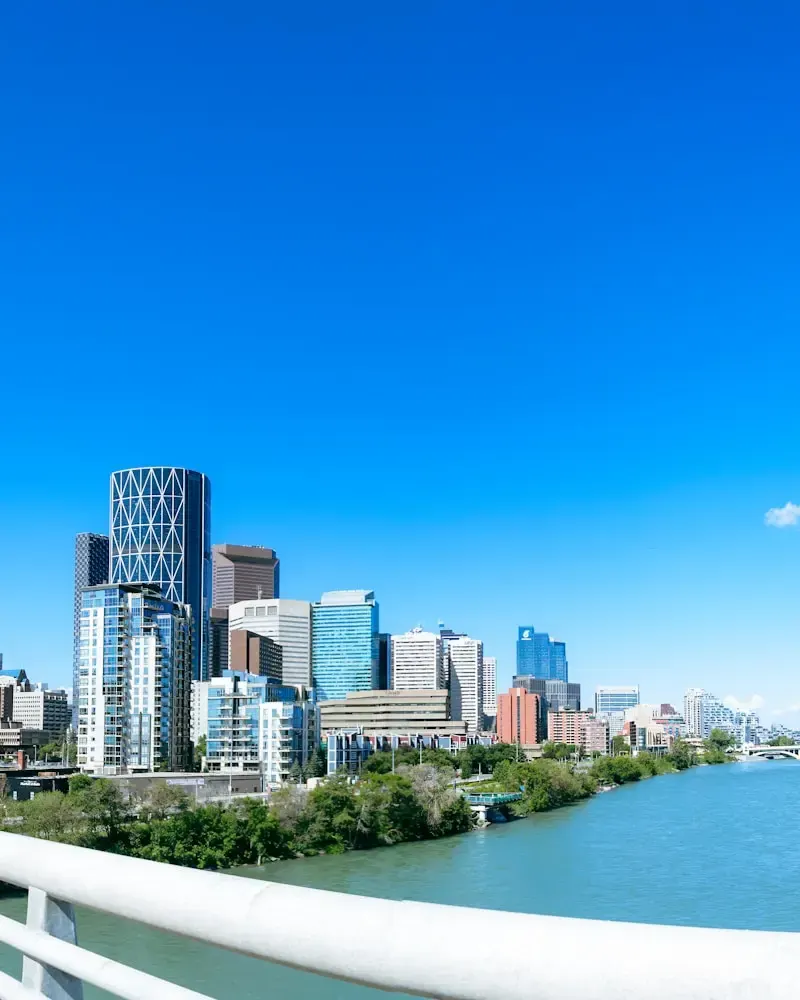

Every city has a neighbourhood argument. New York has Brooklyn versus Manhattan. London has east versus west. Melbourne has north side versus south side. Calgary's version is quieter but no less real: Inglewood, East Village, and the Beltline are the three neighbourhoods most actively competing for the title of Calgary's cultural centre, and each one makes a different argument about what culture means, who it's for, and how much money it should cost.
The competition isn't formal. Nobody's awarding trophies. But the way these three neighbourhoods develop over the next five years will determine where Calgary's creative economy lives, what it looks like, and whether the city's cultural identity coalesces around a single district or distributes across several. The answer matters more than the question suggests.
Inglewood: keep it slightly sleezy
Inglewood's unofficial motto — "Keep Inglewood Slightly Sleezy," abbreviated as KISS — tells you everything about the neighbourhood's relationship with its own success. This is a community that wants to be interesting but not polished, popular but not gentrified, discovered but not overrun. The tension is productive and probably unsustainable, which is what makes it interesting to watch.
The neighbourhood sits east of the Elbow River in one of Calgary's oldest developed areas, with over 400 buildings predating 1914 and more than 100 independent shops occupying them. A February 2026 Islands.com article called it "a walkable, artsy paradise." The Esker Foundation, one of Calgary's best galleries, operates here with free admission and four concurrent exhibitions through April 2026 — Anthony Cudahy's oil paintings, Alexandre Pépin's exploration of queer intimacy through Byzantine and Post-Impressionist references, and two other solo shows. Crawlspace Gallery offers the smaller, scrappier alternative. Ironwood Stage and Grill anchors the folk and acoustic music scene. The Blues Can carries historical weight. Cold Garden Beverage Company has become a social anchor.
The Inglewood Night Market returns for summer 2026, running monthly, and Sunfest in July draws 30,000-plus people to the neighbourhood for a single day. The Fringe Festival, running July 31 through August 8, uses Inglewood venues as its primary base.
The neighbourhood's strength is its accumulation of independent, owner-operated businesses that collectively produce a streetscape with texture. No two storefronts look the same. No chain dominates. The visual and experiential variety is the product of decades of individual decisions by small business owners, not a master plan by a development authority. This is what organic cultural development looks like, and it's extremely difficult to replicate — which is why Inglewood's defenders are so anxious about anything that might disrupt it.
The anxiety is justified. Every neighbourhood that achieves what Inglewood has achieved faces the same paradox: success attracts attention, attention attracts investment, investment raises rents, rising rents displace the independent operators who created the character that attracted the investment. The cycle is well-documented and nearly universal. Whether Inglewood can break it depends on factors mostly outside the neighbourhood's control — zoning policy, property tax assessments, the appetite of developers, and whether the landlords who own those pre-1914 buildings see their tenants as partners or as placeholders.
East Village: the $3-billion experiment
If Inglewood is organic, East Village is engineered. The Calgary Municipal Land Corporation has invested $396 million in infrastructure, attracting nearly $3 billion in planned development. Five new residential projects break ground in 2026, bringing 700-plus new homes to a neighbourhood that currently holds about 4,000 residents and targets 11,500.
The anchors are institutional rather than independent: the Calgary Central Library, which draws over 1.1 million annual visits and has become arguably the most successful public building in the city's history. Studio Bell and the National Music Centre, with exhibitions, recording facilities, and programming that gives the neighbourhood a music identity. The Simmons Building — Charbar, Phil and Sebastian, Sidewalk Citizen Bakery — a food hall that became a destination before the neighbourhood was ready for it. Platform Innovation Centre, anchoring the tech ecosystem. Library Square, a new 162-unit residential development breaking ground east of the Central Library.
East Village is "Blue Sky City" made physical. A former industrial brownfield transformed by public infrastructure investment into a mixed-use cultural district. It works. The library is a genuine public commons. The restaurants are excellent. The development is real and accelerating.
But there's a designed quality to East Village that Inglewood doesn't have and the Beltline doesn't need. The streetscape is clean, the buildings are new, the public spaces are maintained. This isn't a criticism — clean and new and maintained are good things — but it produces a different kind of neighbourhood experience. The texture that comes from age and accident and imperfection isn't here yet. It may come with time, as the planned development fills in and the neighbourhood develops the patina that only decades of use can produce. Or it may not, if the development authority maintains the level of aesthetic control that has characterized the project so far.
The test for East Village isn't whether it can attract residents — the development numbers answer that question. The test is whether it can develop a cultural identity independent of its institutional anchors. Right now, East Village is the library, Studio Bell, the Simmons Building, and some condos. In ten years, does it have the independent coffee shops, the weird little galleries, the bars with character, the restaurants that opened because someone took a chance and not because a development plan allocated space for F&B? That's the difference between a neighbourhood and a development project.
Beltline: the density dividend
The Beltline makes the simplest argument of the three: more people, more culture. With the highest Walk Score in Calgary (91), 370-plus restaurants and bars, and a residential density that dwarfs almost every other neighbourhood in the city, the Beltline generates culture through sheer critical mass.
The BUMP mural program has transformed the neighbourhood's visual identity — the Beltline Urban Murals Project adds new works annually to a collection that includes significant pieces visible from the street. The neighbourhood is where you go when you want to walk out your door and have six dinner options within three blocks, when you want live music on a Wednesday, when you want the urban experience that most of Calgary's suburban geography doesn't provide.
The Beltline's cultural infrastructure is commercial rather than institutional. The restaurants, bars, galleries, and shops exist because the density supports them, not because a development authority planned them. This makes the ecosystem resilient in some ways — businesses that survive in the Beltline do so because they serve a real market — and fragile in others. When rents rise, the quirky operation that gave the neighbourhood its edge closes and gets replaced by something safer and blander. The cycle is already visible: the Beltline of 2026 is more polished and more expensive than the Beltline of 2016, and something has been lost in the transition.
The neighbourhood's most interesting cultural story right now is the fight over the Old YWCA Building. The historic 1911 structure has been vacant since October 2025 and is the subject of an active heritage preservation campaign. Council approved $1 million in the 2026 budget for a scoping report, and an expression of interest for a new tenant closes March 2. The "Save the Old Y" coalition is pushing for a cultural or community use rather than commercial development.
This is the Beltline's version of the Inglewood dilemma: a neighbourhood where the market forces that created the cultural energy are now threatening to consume it. The Old YWCA is a test case. If the building gets a cultural tenant, it signals that heritage and community use still have purchase in a neighbourhood dominated by market dynamics. If it gets flipped into condos or commercial space, it signals the opposite.
The forgotten fourth: Chinatown
Any honest discussion of Calgary's cultural neighbourhoods has to include Chinatown, even — especially — because its current story is one of neglect rather than competition.
The "Tomorrow's Chinatown" cultural plan was approved in December 2022. Three years later, Chinatown BIA Chair Grace Su told CBC that "the plan has been put on the shelf and nothing really got done." She noted that Edmonton allocated $500,000 per year and Vancouver received millions for comparable programs. Ward 7 Councillor Myke Atkinson acknowledged the neighbourhood needs "updated attention."
Chinatown's cultural significance to Calgary is deep and historical. The neighbourhood's restaurants, shops, and community organizations represent one of the oldest continuous cultural presences in the city. The fact that a formally approved cultural plan has gone unimplemented while millions flow into East Village development tells a story about municipal priorities that the city would prefer not to hear.
The contrast is stark: $396 million in CMLC infrastructure investment in East Village. Zero implementation of a cultural plan in Chinatown. The two neighbourhoods are physically adjacent. The disparity isn't accidental.
cSPACE: the quiet alternative
Meanwhile, in Marda Loop, cSPACE King Edward operates as a multi-disciplinary arts incubator in the transformed historic King Edward School. Studio theatre, rehearsal spaces, artist studios, and programming that includes improv shows and photography festival exhibitions.
cSPACE doesn't compete with Inglewood, East Village, or the Beltline for neighbourhood identity dominance. It doesn't need to. It represents a different model: a single building that functions as a cultural anchor for a neighbourhood that isn't otherwise defined by arts activity. The model is replicable, which makes it potentially more significant than any of the neighbourhood-scale stories. If you can turn one school into a cultural incubator, you can turn others. The infrastructure exists all over the city, in the form of underused public buildings waiting for a mission.
Who wins
Nobody, which is the right answer. A city that concentrates its cultural life in a single neighbourhood is fragile. A city that distributes it across several — each with a different character, a different economic model, a different relationship between planning and organic growth — is resilient.
Inglewood's argument is that culture grows best when it's left alone. East Village's argument is that public investment can create the conditions for culture to take root. The Beltline's argument is that density does the work automatically. All three are correct, and none is sufficient on its own.
The city's job is to let them compete without picking a winner — to invest in public infrastructure without overplanning, to protect heritage without freezing change, to allow density without destroying character. It's a balance that no city has ever perfectly struck, which is why the attempt is interesting and the outcome is uncertain.
Calgary's cultural soul isn't in one neighbourhood. It's in the argument between them.
*The Chinook covers Calgary's arts, culture, and the politics that shape them.*