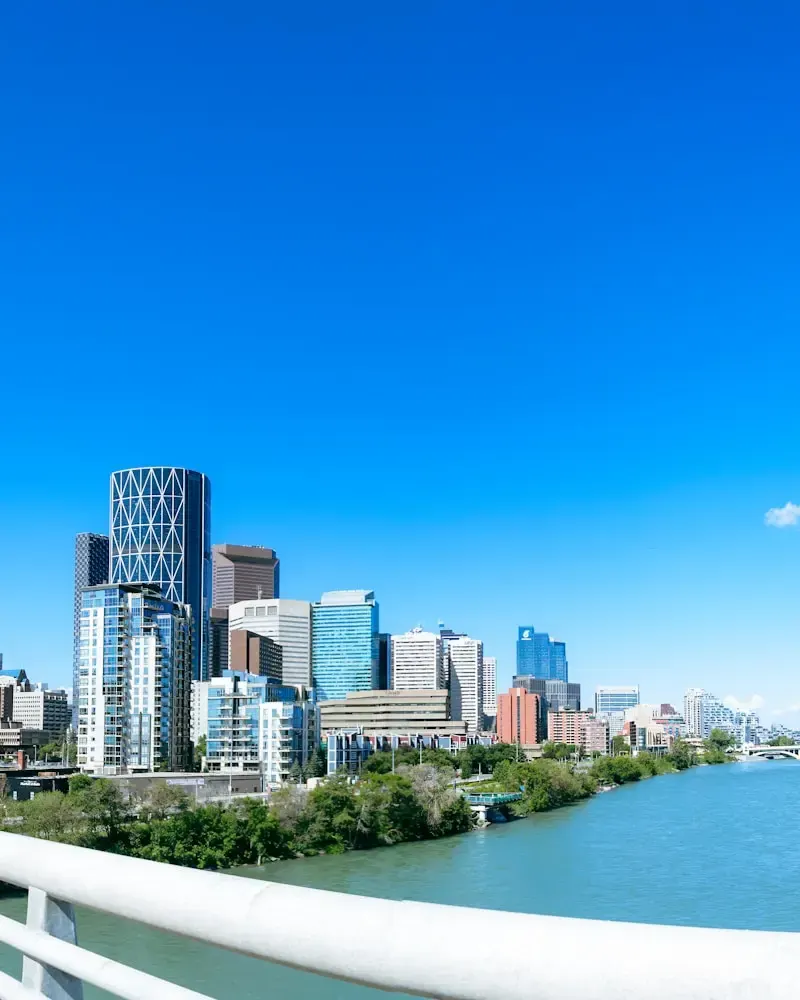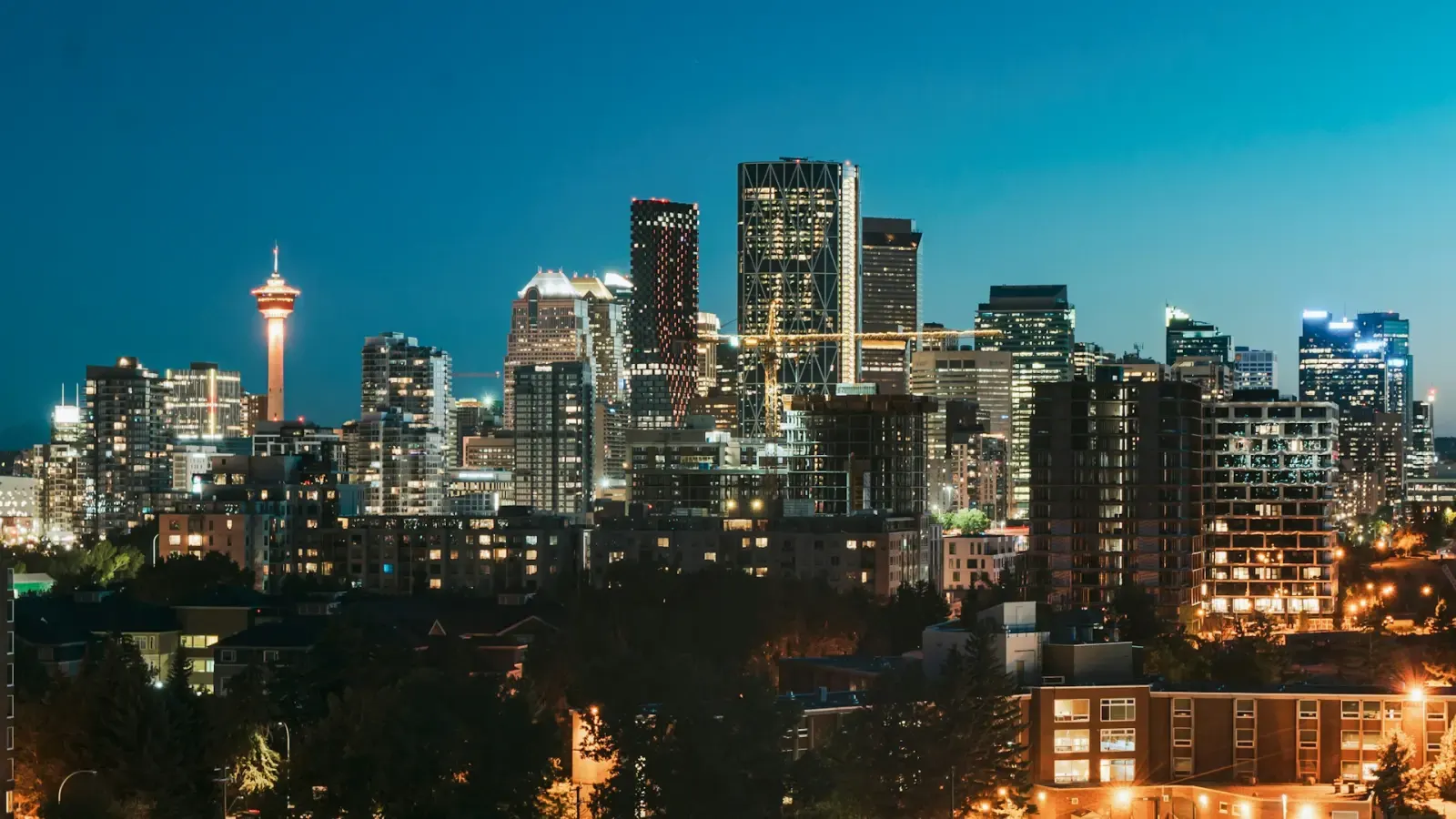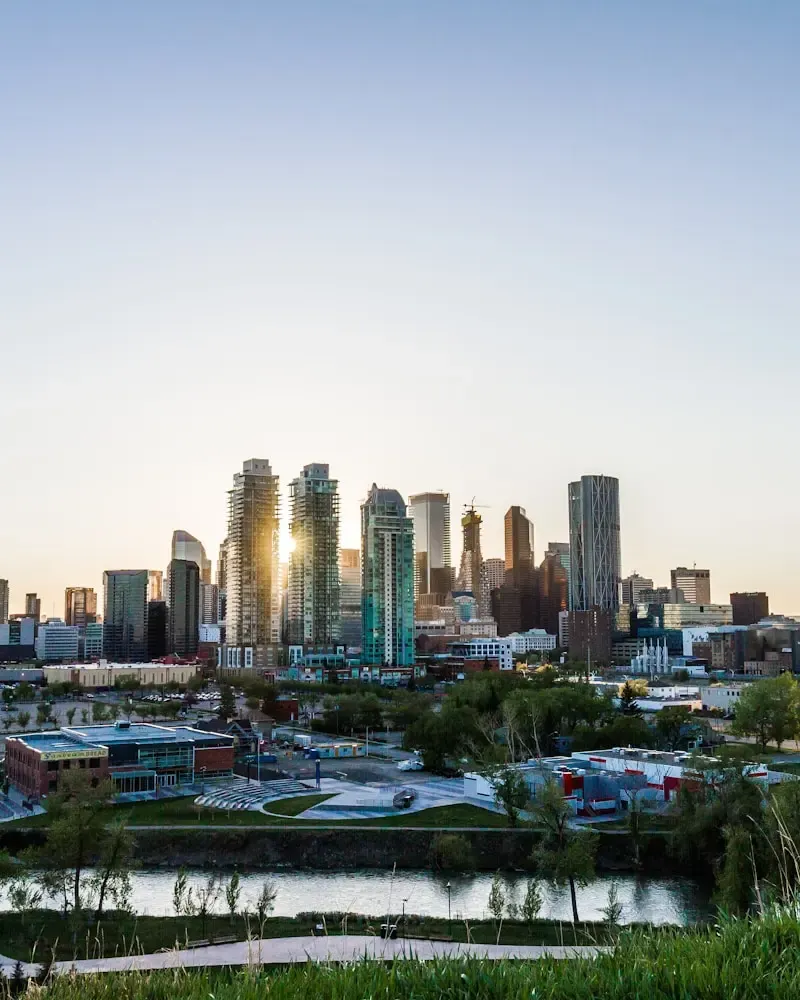

On April 17, 2024, Calgary officially rebranded itself as "Blue Sky City," replacing the previous slogan "Be Part of the Energy." The pivot was deliberate, costly — approximately $4.8 million — and politically controversial. Critics called it an expensive vanity project. Defenders called it overdue. Both were probably right, but neither argument addressed the more interesting question: what does it mean for a city to rebrand itself as something it isn't yet?
Because that's what "Blue Sky City" is. It's aspirational grammar. It describes a Calgary that exists in economic development pitch decks and tourism campaigns — a city of innovation, creativity, diversification, blue skies and open minds. The Calgary that exists on the ground is more complicated, more interesting, and considerably more conflicted about who it's becoming.
The numbers that work
Start with the good news, because it's real.
Calgary's creative sector now comprises 15,323 establishments — 9.8% of all city businesses, outpacing Edmonton's 8.1%. The sector generates $2.63 billion in direct revenue and $1.33 billion in GDP. These aren't boutique numbers. This is a measurable economic sector with scale and growth.
The tech ecosystem is growing faster than anyone predicted. Platform Calgary's 2025 impact report, released February 19, 2026, shows the ecosystem grew 13% in value while comparable markets dropped 14%. Calgary is reportedly North America's fastest-growing tech talent city, with a 61% increase in tech talent in 2025. There are now 64,600 Calgarians working in tech. Member companies at Platform have raised over $1 billion since 2018. A new Calgary Games Kiln accelerator is supporting early-stage game studios, backed by $3 million in combined government investment.
The film industry is quietly thriving. MovieMaker Magazine ranked Calgary number four on its "Best Places to Live and Work as a Moviemaker" list for the fifth consecutive year. At least four productions were active or in preparation in mid-February 2026. The Alberta Film and Television Tax Credit offers up to 22% on eligible costs. HBO shot *The Last of Us* here. *Fargo* Season 5 filmed here. The industry is real, it's growing, and it's producing work that people outside Calgary actually see.
The numbers that don't
Now the other side.
Forty-two of Calgary's top fifty revenue-generating companies are in oil and gas or adjacent energy services. The downtown office vacancy rate hovers around 30.4%, which means roughly one in three office floors in the core is empty. The 2014 oil price crash initiated the first wave of vacancies. The pandemic accelerated them. The hybrid work shift made them structural. Nobody has a credible plan to fill them.
The "Blue Sky City" rebrand cost $4.8 million — a rounding error in the city's budget, but symbolic enough to generate sustained criticism from people who felt the city was marketing an identity it hadn't earned. The phrase itself drew comparisons to Austin's "Keep Austin Weird" — another slogan that became more ironic with each year of corporate development and gentrification.
And then there's the fundamental tension: a city that brands itself as innovative and creative but elected a council that cut $9 million in climate spending, initiated a process to repeal its most progressive housing policy, and drew $60 million from reserves to keep the tax increase below 2%. "Blue Sky City" suggests forward motion. The political direction suggests an electorate pulling the parking brake.
The identity gap
Every city has an identity gap — a distance between how it markets itself and how it actually lives. New York is "the city that never sleeps" but also the city of crushing rent and institutional exhaustion. Austin kept it weird until it didn't. Portland put a bird on it until the bird left for somewhere cheaper.
Calgary's identity gap is wider than most because the aspirational identity is so dramatically different from the historical one. This was Cowtown. Stampede City. An oil company town that happened to have some buildings downtown and a river running through it. The identity was clear, coherent, and economically accurate: Calgary existed because of energy, and the energy industry shaped everything from the skyline to the school board to the charitable giving that funded the arts.
"Blue Sky City" asks Calgarians to see themselves as something else — or at least something additional. A tech hub. A creative economy. A city of ideas. The problem is that identity transitions don't happen by rebranding. They happen by accumulation — by enough people doing enough work in enough new sectors over enough years that the weight of evidence shifts the story.
The evidence is shifting. The 15,323 creative establishments are evidence. The 64,600 tech workers are evidence. The $1 billion raised by Platform Calgary companies is evidence. But 42 of the top 50 companies are still in energy, and the people who work there — who pay the property taxes, who fund the United Way campaigns, who sit on the boards of the arts organizations — still see Calgary through the lens that shaped their careers. The identity transition is happening, but it's happening in the gaps between the old story, not as a replacement for it.
Where culture lives in the gap
The most interesting cultural work in Calgary right now happens in the tension between these identities rather than in resolution of them.
The BUMP Festival paints murals on Beltline buildings — including the world's tallest mural, a 95-metre piece by German artist DAIM — that transform the streetscape of a neighbourhood caught between condo development and character preservation. Contemporary Calgary mounts exhibitions in a building on the edge of a downtown that can't decide whether it's dying or being reborn. Sled Island books experimental hip-hop acts in venues that sit half-empty on weekday nights. The food scene produces restaurants like Eight, where an 18-course tasting menu blends Indigenous and immigrant flavours in a city that still eats more steak per capita than anywhere in the country.
None of this resolves the identity gap. All of it makes the gap productive. A city that knows exactly what it is produces predictable culture. A city in transition — uncertain, contradictory, arguing with itself about who it's becoming — produces culture that has something at stake.
East Village as metaphor
If you want to see the identity transition in physical form, walk through East Village.
CMLC has invested $396 million in infrastructure, attracting nearly $3 billion in planned development. Five new residential projects break ground in 2026, bringing 700-plus new homes. About 4,000 people live there now, targeting 11,500. The anchors — Calgary Central Library (over 1.1 million annual visits), Studio Bell, the Simmons Building (Charbar, Phil and Sebastian, Sidewalk Citizen), Platform Innovation Centre — constitute a concentrated creative economy district that didn't exist fifteen years ago.
This is "Blue Sky City" made physical. A former industrial wasteland transformed into a mixed-use cultural district anchored by public institutions and activated by independent businesses. It works. People go there. The library is mobbed. The restaurants are full. The development is real.
But walk ten minutes north and you're in a downtown core with a 30% vacancy rate. Walk ten minutes east and you're in Chinatown, where the "Tomorrow's Chinatown" cultural plan approved in 2022 has, according to the Chinatown BIA chair, "been put on the shelf and nothing really got done." Walk ten minutes south and you're in the Beltline, where the historic Old YWCA Building has been vacant since October 2025 and is the subject of a heritage preservation battle that may or may not be resolved before the building deteriorates past saving.
East Village proves the aspiration is achievable. Everything around it proves the aspiration isn't evenly distributed.
The honest version
Here's what "Blue Sky City" would say if it were being honest: we're a city that made its money in oil and gas and is trying to figure out what comes next. Some of us are further along than others. The tech sector is real. The creative economy is real. The cultural infrastructure we're building is real. But we still have a 30% downtown vacancy rate, we just elected a council that's nervous about change, our biggest industry is carbon extraction, and we're not sure whether we're diversifying fast enough to survive the transition.
That's not a slogan. It's a condition. And it's a more interesting foundation for a cultural identity than any branding exercise could produce, because it's true, and truth — complicated, uncomfortable, unresolved — is what gives a city's culture its energy.
Calgary doesn't need to resolve its identity crisis. It needs to stay honest about it. The blue sky is real. So is the 30% vacancy rate. So is the $2.63-billion creative sector and the 42 energy companies and the $660-million performing arts centre that's $200 million short. All of it is true at the same time.
A city that can hold all of that simultaneously, without collapsing into either boosterism or despair, is a city worth writing about. Which, for whatever it's worth, is exactly what we're doing.
*The Chinook covers Calgary's arts, culture, and the politics that shape them.*